A B C D F G H J K L M P R S T W
58 60 previous alphabetically next alphabetically
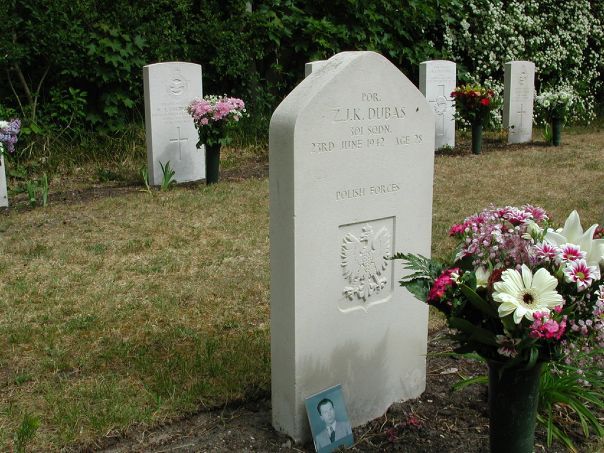
Dubas, Zbigniew Jan Kazimierz
| Grave number | 59 |
| Rank | Pilot Officer (porucznik) Nr. P-0932 P.A.F. |
| Squadron | 301 Dywizjon Bombowy Ziemi Pomorskiej, Polish Air Forces |
| Date of birth / age | August 19, 1913 / 28 years |
| Reported missing | June 23, 1942 |
| Aircraft type | Wellington IV, Z-1345 |
| Washed ashore | July 15, 1942 |
| Buried | July 18, 1942, 6.00 p.m. |
| Father | |
| Mother | |
| Partner | |
| Place of residence | Gorlice, Polen |
Details |
Found between km. 14 and 15. |
| From "Winged Past" by Ab A. Jansen | On the night of June 22 to 23, 1942, it was again the Polish Air Force that made a new sacrifice here. The Wellington MK IV Z1345 GR-D of the 301st (Polish) Squadron, which had been sent to attack Emden, crashed into the North Sea that night, presumably 18 km northwest of Terschelling. Some messages that the aircraft transmitted in distress and that were received in England lift a corner of the veil surrounding this aviation drama. Presumably it was hit somewhere in the target area or got a 'breakdown' and the crippled Wimpey 'limped' back to England. At 02.38 hours a message was received at Hemswell requesting a 'fix' (cross bearing); fifteen minutes later an SOS was received. A second 'fix' was given an hour later, at 03.14 hours, and a further message was received: 'enemy fighters; we have no dinghy'. It does not take much imagination to taste the drama. Apparently, to make matters worse, the aircraft, already in difficulties, was intercepted and attacked by a German night fighter. Presumably the rubber boats, which were stored in the engine nacelles, were destroyed by the enemy action. The Wellington crashed into the sea; the exact location is unknown. Why the aircraft did not turn inland earlier is a question that will remain unanswered. From various 'fixes' that were given, it appears that the crew intended to make an emergency landing at sea, but probably did not dare to do so because they did not have a proper dinghy. The body of the Captain, Pilot Officer Zbigniew Jan Kazimierz Dubas, washed ashore on Terschelling on July 15, 1942 |